Working on ESG All Year But Still Not Getting the FTSE Russell Score You Deserve?

Let’s Fix That: Build a Simple Data System That Actually Gets You Points

Your ESG Score Didn’t Meet Your Goal—Even Though You Did the Work

You’ve been running ESG programs all year. You have sustainability policies in place. But your FTSE Russell ESG score still isn’t where you want it to be. Sound familiar? Here’s the good news: you’re probably doing more than you think. The issue isn’t the work itself—it’s how you’re organizing and showing that work. This year, let’s change that by setting up a straightforward data system that helps evaluators see what you’re actually doing.

Introduction

Many organizations have received their FTSE Russell ESG Rating scores, which were released in December 2025. Congratulations to those who achieved their target scores. For organizations that fell short, you might feel disappointed and wonder, “Why didn’t our score improve as expected when we’ve implemented so many ESG initiatives?” The answer isn’t about doing too much or too little work—it’s about having systematic data collection, documentation and evidence management, and disclosure practices that allow assessors to properly evaluate and score your efforts. This article provides an actionable roadmap to help you establish an ESG data management system throughout the year, enabling you to systematically elevate your scores with principles that support long-term sustainable operations.

Understanding FTSE Russell ESG Rating Assessment Principles

FTSE Russell assesses ESG based on verifiable data and disclosures with a clear audit trail for data sources. Publicly listed companies are evaluated annually, with the assessment cycle typically running from June through March of the following year. Scores become available approximately four weeks after the Index Review in June, with official results announced in December.

A critical part of the process is the Company Review Period, when companies can provide additional information. This is an essential opportunity for companies to clarify data and address questions from FTSE Russell, which can result in higher scores. Here’s a summary of what you need to ensure to earn.

5 Main Reasons Your Score Isn’t Improving Despite Additional Work

Based on experience working with multiple organizations, here are five commonly encountered issues:

1. Scattered Data with No Clear Data Owner or Job Owner

ESG data often resides across different teams and files, using inconsistent definitions. When compiling data for reporting, this frequently leads to inconsistencies or overlapping data that’s difficult to explain and utilize effectively.

2. Evidence Isn’t Public or Can’t Be Found

Even when organizations genuinely implement initiatives, if evidence isn’t publicly disclosed or easily searchable, assessors cannot award points. This causes organizations to miss out on well-deserved scores.

3. Irregular Data Collection Cycles

The “compile everything at year-end” approach often results in missing critical data or misalignment with assessment cycles. Year-end data collection not only risks incomplete data but also creates significant headaches for the team.

4. Policies Without Measurement, Plans Without Results

Since FTSE Russell assesses both “structure” and “outcomes,” having only policies without KPIs, or only numbers without governance frameworks, leads assessors to view the data as lacking foundation, resulting in incomplete scoring.

5. No Quality Assurance/Quality Control (QA/QC)

Organizations that change policies, plans, and definitions every quarter show no continuity in their initiatives. When current year data can’t be compared with previous years, the credibility of the program diminishes.

Change your perspective and make your ESG program “scorable,” not just “doable.” The key principle to understand is that scores don’t come from good intentions but from “provable systems.” Therefore, establishing an effective ESG data management system is more important than conducting numerous ESG activities without systematic documentation.

Organizing ESG Data Collection in 5 Steps

If you don’t know where to start, try following these steps to establish a data management system and elevate your ESG reporting scores:

1. Analyze Scores and Gaps

Clearly identify “where points were lost” and “what should be improved first.” Review the latest assessment results broken down by Pillar (Environmental, Social, Governance) and prioritize data based on score concentration. This will reveal your “priority fix list” to identify what’s urgent and should be addressed first. Don’t forget to include the names of responsible parties, reviewers, and approvers for each topic to plan subsequent work.

2. Create an ESG Data Management System

Establish consistent data collection that allows year-round comparison. Develop a data framework that typically includes definitions for each indicator, collection methods, units of measurement, data collection scope, base year, and data sources. Develop tools or methods to track ESG work and data covering all indicators, data collection status, responsible parties, and supporting evidence or reference documents. Remember to align data collection cycles with annual assessment schedules.

3. Prepare Evidence and Reference Documents for Public Disclosure

Make evidence and reference data easily searchable, verifiable, and public. Create standardized datasets for organization-wide communication and collaboration, including policies, operational procedures, and KPI definitions, so the entire organization shares the same vision and moves toward common goals.

4. Design Disclosure Strategy

Ensure disclosed information is clear, relevant to the criteria, and matches FTSE Russell keywords. Structure your reports and ESG website pages for easy searching with clear categories and convenient access. Content should cover governance, policies and practices, goals and indicators, program progress, and verifiable reference evidence.

5. Test Run and Prepare for Assessment

Reduce risks before entering the actual assessment process. In this step, verify consistency between outcome figures, actual programs, disclosed reports, and reference documentation to ensure all data sets align. Assessors may have questions and follow-ups. At this juncture, readiness to respond quickly with supporting evidence is crucial to ensure your report doesn’t miss deserved points.

Quick Start Checklist

If you want to start immediately, here are 8 steps to take first:

  1. Assign data owners for each ESG topic – Designate clear responsibility for each area (E, S, G)
  2. Create a one-page summary showing where score gaps exist, starting with key indicators that most impact scores
  3. Build an ESG data tracking sheet – Use Google Sheets or Excel, but it must be accessible to everyone
  4. Create a folder for reference documents, supporting evidence, and related data with systematic structure for easy searching
  5. Set clear data collection cycles – Monthly or quarterly depending on work nature and data type, add to calendar and notify all stakeholders
  6. Summarize high-impact topics – Review the big picture and prioritize
  7. Create an ESG Hub Page on your website – Even a simple page is better than nothing
  8. Establish mandatory data review before any external submission or publication

Improve Your ESG Reporting Score with “Systems”, Not “More Work”

If your FTSE Russell ESG Rating score didn’t meet targets last year, this year is a golden opportunity to reset your approach. The critical shift is moving from year-end fire-drill ESG projects to creating a repeatable, continuous ESG management system that operates reliably year-round. When you have a solid system for data collection, evidence management, and disclosure, you’ll achieve:

Are You Ready to Get Started?

If your organization needs additional consultation on establishing an ESG Data Management system or wants a customized FTSE Russell ESG Readiness Checklist designed specifically for your organization, don’t hesitate to contact us for further guidance.

Key Resources & References

FTSE Russell & ESG Rating

  1. FTSE Russell ESG Ratings Methodology
  2. LSEG Data & Analytics – ESG Rating Process

International ESG Standards & Frameworks

  1. GRI Standards – Global Reporting Initiative
  2. TCFD Guidance – Task Force on Climate-related Financial Disclosures
  3. CDP Disclosure Platform – Carbon Disclosure Project

Thailand-Specific Resources

  1. SET Sustainability Reporting Guide – Stock Exchange of Thailand
  2. SEC Thailand – Sustainability Disclosure Guidelines – Securities and Exchange Commission
A guide to understanding the FTSE Russell ESG Scores for corporate leaders

What is FTSE Russell ESG Scores

FTSE Russell is a framework designed for worldwide companies to evaluate their performances in three pillars; Environmental, Social, and Governance. In collaboration with the Stock Exchange of Thailand (SET) and the London Stock Exchange Group (LSEG) launched a comprehensive assessment framework for benchmarking, analytics, and data solutions for investors. The purpose of this framework is increasingly significant for publicly listed companies as investors progressively incorporate sustainability factors into their investment decisions.

The Explanation of FTSE Russell ESG Scores

The FTSE Russell ESG Rating methodology assesses companies across 14 ESG themes containing over 300 individual indicators. They are divided into (1) general indicators and (2) industry group indicators, with each listed company being assessed on average around 125 indicators, with the FTSE Russell indicators giving approximately 56% weight to general questions and 44% to questions that delve deeper into sectors and countries.

These themes are categorized into three pillars: Environmental, Social, and Governance.

The Environmental pillar examines how companies manage their impact on the natural world, focusing on climate change strategies, water security measures, biodiversity protection efforts, and pollution control systems. Companies are evaluated on their policies, programs, targets, and actual performance in reducing their environmental footprint.

The Social pillar assesses how organizations interact with employees, customers, suppliers, and their communities. This includes labor standards and working conditions, human rights policies and community engagement, health and safety protocols, and customer responsibility practices such as product safety and data protection.

In the Governance pillar, FTSE Russell examines corporate structures and processes that ensure proper oversight, accountability, and ethical business conduct. Key areas include board composition and effectiveness, anti-corruption measures, tax transparency, and comprehensive risk management frameworks.

Companies are evaluated on both their exposure to ESG risks (determined by their industry and geographic operations) and the quality of their management response to these risks. This creates a balanced assessment that recognizes both inherent operational challenges and management effectiveness. For example, an oil company may have high environmental risk exposure but could still score well if it demonstrates exceptional management of those risks relative to industry peers.

SET ESG Rating vs. FTSE Russell ESG Scores: Key Differences

The Stock Exchange of Thailand (SET) ESG rating system and FTSE Russell’s framework share similar objectives but differ in several important aspects.

In terms of geographic focus, SET ESG is explicitly designed for the Thai market and business environment, whereas FTSE Russell applies global standards that enable international comparability. This distinction is crucial for companies with international investors or ambitions for global expansion.

The methodology also differs significantly. SET ESG is tailored to the Thai business context, taking into account local regulatory requirements and market conditions. FTSE Russell employs a standardized global methodology that allows for cross-border and cross-industry comparisons, making it particularly valuable for international investment decisions.

The assessment process varies as well. SET ESG typically conducts annual assessments based primarily on company disclosures. FTSE Russell employs continuous assessment with more frequent updates, incorporating a wider range of data sources beyond company reports. This provides a more dynamic and comprehensive view of a company’s ESG performance.

Data sourcing represents another key difference. While SET ESG relies predominantly on company-disclosed information, FTSE Russell supplements this with multiple sources including third-party data, news analysis, and stakeholder reports. This multi-source approach helps validate company claims and provides a more objective assessment.

Thematic coverage also distinguishes the two frameworks. SET ESG focuses on issues particularly relevant to the Thai market and regulatory environment. FTSE Russell covers a comprehensive range of global ESG issues, which may include emerging risks that are not yet prevalent in Thailand but are important to international investors.

Finally, the scoring systems differ in presentation. SET ESG uses a stars-based rating system (1-5 stars), while FTSE Russell employs a numerical scale ranging from 0.0 to 5.0, wherein a score of 0.0 indicates an absence of evaluative information, and a score of 5.0 represents the pinnacle of best practices. The FTSE Russell approach allows for more granular differentiation between companies and clearer tracking of incremental improvements.

The key distinction is that while SET ESG provides valuable insights into the Thai market, FTSE Russell offers a globally recognized benchmark that enables international comparisons and attracts a broader range of global investors.

Opportunities for High-Scoring Companies

Companies that achieve high scores in the FTSE Russell ESG Scores can leverage several significant advantages in today’s sustainability-focused business environment.

Enhanced access to capital represents perhaps the most tangible benefit.

Global investment firms managing trillions in assets use FTSE Russell ESG ratings to screen potential investments. High-scoring companies gain privileged access to ESG-focused investment funds, which have seen record inflows in recent years. They may also secure green bonds and sustainability-linked loans at favorable rates, reducing capital costs. Furthermore, they attract long-term institutional investors who value sustainability as a proxy for management quality and future resilience.

Strong ESG performance also offers substantial competitive differentiation. Companies with high FTSE Russell ratings enjoy improved reputations among stakeholders, which translates into enhanced brand value and customer loyalty, particularly among younger consumers who increasingly make purchasing decisions based on sustainability criteria. This reputation advantage extends to stronger positioning in competitive tenders, particularly for government and corporate contracts that increasingly incorporate ESG requirements.

Risk mitigation and operational efficiency present another valuable opportunity.

The framework encourages risk management practices that lead to reduced exposure to environmental and social risks, which can manifest as costly disruptions, litigation, or regulatory penalties. Companies often experience lower compliance costs through proactive management rather than reactive responses to new requirements. Many sustainability initiatives simultaneously enhance operational efficiency through resource optimization, whether in energy, water, or materials. Additionally, strong ESG performers face a reduced likelihood of regulatory penalties as they typically exceed compliance requirements.

Global recognition and stakeholder trust

High FTSE Russell ratings provide international recognition of sustainability leadership that extends beyond national borders which investors can compare scores with listed companies around the world. This improved credibility with multinational partners and customers who increasingly screen their supply chains for sustainability risks. Strong performers also develop stronger relationships with regulators and policymakers, potentially influencing future policy development. The reputation benefits extend internally as well, enhancing employee and talent attraction and retention in competitive talent markets where purpose-driven organizations have advantages.

Practical Implementation for Thai Companies

For Thai corporate leaders looking to improve their FTSE Russell ESG performance, several strategic approaches can yield significant results.

You better start with gap analysis and strategy development, which represent essential first steps. Companies should comprehensively compare their current sustainability practices against FTSE Russell metrics to identify strengths and weaknesses. This assessment helps identify high-impact improvement areas based on materiality assessment—focusing resources where they will have the greatest effect on both sustainability outcomes and ratings improvement. With this understanding, organizations can develop a comprehensive ESG strategy with clear goals, timelines, and accountability measures that align with both business objectives and FTSE Russell criteria.

Governance structure enhancement often yields substantial rating improvements. This involves ensuring board-level oversight of ESG matters, with clear reporting lines and regular sustainability discussions at the highest organizational level. Companies should establish clear accountability for sustainability performance through designated roles and compensation links. Integrating ESG considerations into risk management frameworks helps identify emerging issues before they become problems and demonstrates a sophisticated management approach to potential investors.

Robust data management and disclosure systems are increasingly critical. Leading companies implement specialized systems to collect, verify, and report ESG data with the same rigor as financial information. Aligning disclosures with international standards such as GRI, SASB, and TCFD ensures compatibility with investor expectations and rating methodologies. Transparency in both successes and challenges builds credibility with raters and investors, who recognize that sustainability transformation is a journey rather than an immediate destination.

Stakeholder engagement complements these technical approaches. Companies should regularly engage with investors to understand their evolving ESG expectations and priorities. Collaboration with industry peers on common sustainability challenges can accelerate progress and demonstrate sector leadership. Participation in relevant sustainability initiatives and platforms increases visibility and provides valuable learning opportunities that can inform internal practices.

In the era of responsibility

The FTSE Russell ESG framework represents more than just a rating system—it offers a roadmap for sustainable business transformation. For Thai corporate leaders, understanding and implementing this framework can drive long-term value creation while meeting the growing expectations of global investors and stakeholders.

By strategically approaching the FTSE Russell assessment, companies can transform sustainability compliance into a competitive advantage, accessing new capital opportunities while building resilience for the future. In an era where sustainable business practices increasingly define market leaders, high FTSE Russell ratings serve as both validation of current excellence and a foundation for continued success in an evolving business landscape.

An Overview of ESG reporting

What is ESG reporting?

ESG reporting stands for Environment, Social, and Governance which are three components of sustainability that determine an organization’ success in the long-term. ESG reporting reveal measurable activities that how well organizations integrate environmental impact, social responsibility, and governance practices. ESG reporting includes strategies and operations to create tangible value which benefit the company and stakeholders. ESG reporting, therefore, is a key area of focus for business looking to improve their sustainability credentials (Emerick, D., No Clue). In present, management teams at listed and public-interest companies are increasingly being required (by stock markets and government bodies) to provide ESG disclosure with their quarterly and annual reporting. Moreover, it is a communication tool that play an important role in convincing skeptical stakeholders such as investors, creditors, employees, consumers, etc. by showing transparent organization’s actions, risks, and opportunities. In contrast, Ineffective or mislead ESG reports may be considered greenwashing (Peterdy, K., 2023), which occurs when the management team within organization makes false, unsubstantiated, or outright misleading statements or claims about the sustainability of a product or service without a verifiability principle, or even about business operations more broadly. However, some greenwashing is unintentional, due to a lack of knowledge or understanding on the part of management, but sometimes greenwashing is also carried out intentionally through marketing efforts (Peterdy, K., 2022).

Scoring an ESG

As for an ESG score is an objective measurement or evaluation of a given organization, fund, or security’s performance under ESG issues. ESG scoring could be either industry-specific or industry-agnostic. Industry-specific scoring system evaluates issues that regard as material to the industry at large like substances of material, context of materials, or acquiring process of material, while industry-agnostic corporate broadly accepted factors that are meaningful across industries like climate change, human rights, or Diversity, Equity and Inclusion (DEI) (Miller, N. 2022). Courtnell, J. (2022) from Green Business Bureau (GBB) described ESG reporting in two types as 1) ESG Framework and 2) ESG Standard. ESG Framework is a framework is broad in its scope, giving a set of principles to guide and shape understanding of certain ESG topic. ESG frameworks will guide the direction of ESG reporting, but will not provide a methodology for the collection of information, data, or the reporting itself. Framework are useful to use alongside ESG standard, or when a well-defined standard does not exist. On the other side, ESG Standards are more specific in their focus. They contain detailed criteria explaining what needs to be reported. In the context of ESG, this means standards dedicate how information and data are collected, and how a report needs to be produced such as what topics and areas to include. Standards make frameworks more actionable by ensuring comparable, consistent, and reliable disclosure that appear in a report.

Standards and frameworks for ESG Reporting

 While, Byrne, D. (2023) from Corporate Governance Institute (CGI) stated ESG reporting frameworks are more about principles and focus on grater questions, such as how information is structured, what information is collected, etc. and ESG reporting standards are more technical. They give specific requirements, like precise metrics for reporting each topic. Standards and frameworks should be used together for ensuring reliability of the reports. In addition, Letta, A. T. (2022) from esg.tech supported that the frameworks provide an overview of the structure and topic to be addressed. Standards provide detailed structures, including specific metrics and detail criteria. Frameworks are sometimes put into practice in absence of well-defined standards and/or allow flexibility in setting direction for reporting without prescribing a specific methodology. In more detail, Courtnell, J. (2022) divided ESG Frameworks into 3 categories including 1) Voluntary Disclosure Framework, 2) Guidance Framework, and 3) Third-Party Aggregators. Under voluntary disclosure frameworks, an organization actively discloses its sustainability-related policies, practice, performance data, and information related to ESG criteria, which includes checklist 25 steps of GBB. Popular voluntary disclosure frameworks are 1) Carbon Disclosure Project (CDP) 2) Global Real Estate Industry Benchmark (GRESB) 3) Dow Jones Sustainability Indices (DJSI). In terms of the guidance frameworks, they provide recommended methodologies and guidance to help companies identify, manage, and report on their ESG performance. The most popular guidance frameworks are 1) Sustainability Accounting Standards Board (SASB) 2) Global Reporting Initiative (GRI) 3) Task Force on Climate-Related Financial Disclosure (TCFD) 4) Carbon Disclosure Standard Board (CDSB) 5) International Integrated Reporting Council (IIRC). Finally, Third-Party Aggregators refer to framework that assess an organization’s performance based on aggregated, and publicly available data. The Data is collected from company-sourced filings, publications, company websites, annual reports, and/or sustainability or CSR reports. The main third-party aggregators are 1) Bloomberg Terminal ESG Analysis 2) Institutional Shareholder Service (ISS E&S) Quality Score (ISS) 3) Morgan Stanley Capital International (MSCI) 4) Sustainalytic. On the other hand, there are only 2 ESG reporting standards showed, which are 1) European Financial Reporting Advisory Group (EFRAG) and 2) International Sustainability Standard Board (ISSB). When, Byrne, D. (2023) mentioned only 4 common ESG report frameworks, which falls under the guidance frameworks, comparing with data from Courtnell, J. (2022), including 1) Task Force on Climate-Related Financial Disclosure (TCFD) 2) International Integrated Reporting Council (IIRC) 3) Global Reporting Initiative (GRI) 4) Carbon Disclosure Standard Board (CDSB). And common ESG reporting standard are 1) European Financial Reporting Advisory Group (EFRAG) 2) International Sustainability Standard Board (ISSB) and 3) The sustainability Accounting Standard Board (SASB), which Courtnell J. identified it as a guidance framework. On the other hand, Letta, A. T. (2022) only stated 1) Task Force on Climate-Related Financial Disclosure (TCFD) as an example of ESG report frameworks and 2 global recognized ESG report standards including 1) Global Reporting Initiative (GRI), which both Courtnell, J. and Byrne, D. identified as a guidance framework, and 2) Sustainability Accounting Standards Board (SASB), which Courtnell, J. identified as a guidance framework, but D. argued it is a standard as well as Letta, A. T.

ESG in Thailand

In Thailand, we are at the starting point to surf on ESG flow. The Stock Exchange of Thailand (SET) revealed Sustainability Reporting Guide for listed companies together with ESG metrics for each industry group in 2022. The guide line for sustainability reporting also complied with the 56-1 One Report form and can be used as a vital checklist for sustainable business development and investment (SET, 2022). Apisak Kiewkarnka, deputy manager and head of finance for the SET, said the bourse had developed a SET-ESG framework focused on fulfilling 4 specific sustainable development goals: 1) industry innovation and infrastructure ()SDG-9, 2) responsible consumption and production (SDG-12), 3) reduce inequity (SDG-10), and 4) climate action (SDG-13) (Kiewkarnka, A., 2022), while Anantananon, R. (2022) assistant manager and head of sustainable business for the SET added there are 2 platforms are under development 1) SET ESG Data Platform to make ESG-related data disclosure mandatory for companies 2) SET ESG Academy to rise awareness regarding ESG among companies and universities. An intimate partner to stock exchange sector as the bank industry in Thailand also announced ESG declaration in 2022 in order to set the banking industry’s clear common direction in addressing ESG agenda. The Thai Bankers’ Association (TBA) outlined action priorities in addressing ESG risks and opportunities regard to climate change (SDG-13), diversity and human rights (SDG-5), financial inclusion (SDG-8), and reduced inequities (SDG-5), while fully supporting Thailand toward UN SDGs and commitment to the Paris Agreement. All TBA members agreed on 6 shared action priorities including 1) Governance 2) Strategy 3) ESG Risk Management 4) Financial Product 5) Communication 6) Disclosure (BOT & TBA, 2022). Assoc. Prof. Phd. Nattavud Pimpa Assistant Dean Sustainability, College of Management, Mahidol University stated that Thai businesses are still leaning to fully comprehend the need to integrate ESG factors into their operations. Great obstacles in adopting ESG are the lack of consensus and consistency in ESG reporting and measurements, lack of the manpower or technology to devote to the extension effort required to collect and analyze ESG data, and lack of transparency in formal systems (Pimpa, N., 2023).

Current ESG Situations

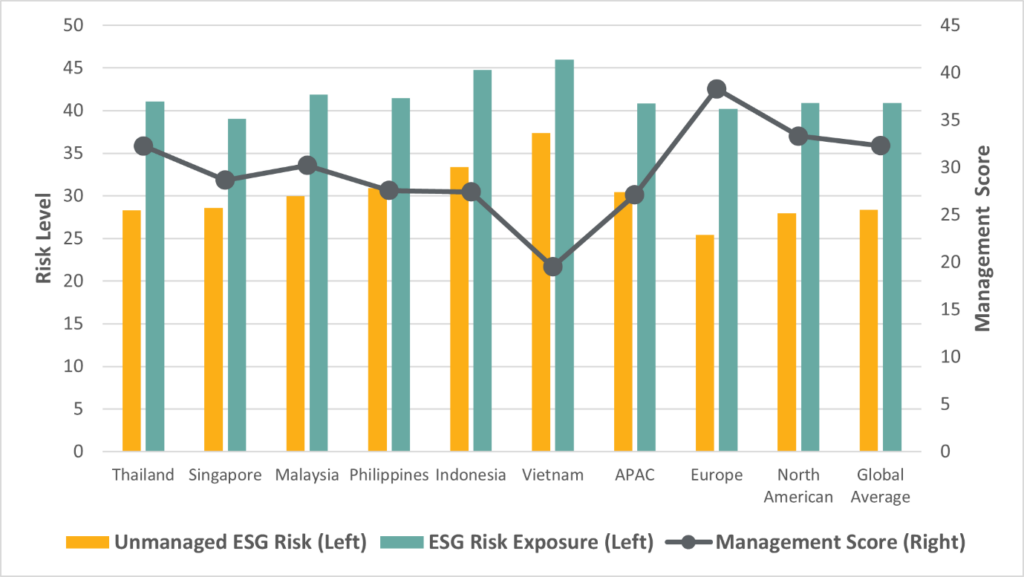
It is obviously seen that there are many commotions in the ESG overview at the moment either in global or local notion in terms of reporting framework and standard, which there is no absolute for any countries. At the end of the day, all of these tangible evidences expose significant trend and transition toward sustainability from capital sector around the world. Organizations both government and Private, therefore, should start to adjust their operating mindset and monitor about related ESG issues from different fields in order to create their own ESG strategies, action plans, and clear, consistent, and align reporting frameworks, which suite for each organization and get on with their stakeholders. Each organization from different backgrounds and industries may requires different necessary resource and expertise to manage, collect, and analyze reliable ESG data, in some organization will consume higher cost and time for accomplished goals though (Pimpa, N., 2023). However, Thailand is a leader in 6 Asean countries (Singapore, Malaysia, Thailand, Vietnam, Indonesia, and Philippines) in terms of average ESG performance. The sustainability disclosure performance ranking in 2019 by Corporate Knights, a research firm, the Stock Exchange of Thailand ranked 9th of 47 stock exchanges worldwide, which is the highest of all of the APAC region. Following by The Singapore Exchange, Philippine Stock Exchange and Indonesia Stock Exchange rake 24, 30, and 36, respectively. Vietnam and Indonesia show higher unmanaged ESG risk due to lower managed score and higher exposure to high ESG risk industries such as mining, oil and gas, steel, i.e. (Pan, F., 2021) and (Walker, R., 2021).

ASEAN ESG performance comparison 2019

Source from: Sustainalytics https://www.sustainalytics.com/esg-research/resource/investors-esg-blog/esg-disclosure-and-performance-in-southeast-asia

References:
  1. Byrne, Dan (2023) What’s the difference between ESG reporting standards and frameworks. [online] London: Corporate Governance Institute (CGI). Available from: https://www.thecorporategovernanceinstitute.com/insights/guides/whats-the-difference-between-esg-reporting-standards-and-frameworks/ [Access 12 May 2023].
  2. Courtnell, Jane (2022) ESG Reporting Frameworks, Standards, and Requirements. [online] Texas: Green Business Bureau. Available from https://greenbusinessbureau.com/esg/esg-reporting-esg-frameworks/ [Access 9 May 2023].
  3. Emerick, Dean (No clue) What is ESG Reporting? [online] Ontario: ESG/ The Report. Available from: https://www.esgthereport.com/what-is-esg-reporting/ [Access 12 May 2023].
  4. Letta Anamim Tesfaye (2022) What is the difference between ESG framworks and standards? [online] Paris: esg.tech. Available from: https://esg.tech/how-to/esg-frameworks-and-standards/ [Access 12 May 2023].
  5. Miller, Noah (2022) ESG Score. [Online] Vancouver: Corporate Finance Institute (CFI). Available from https://corporatefinanceinstitute.com/resources/esg/esg-score/ [Access 12 May 2023].
  6. Pan, Frank (2021) ESG Disclosure and Performance in Southeast Asia. [online] London: Sustainalytics. Available from: https://www.sustainalytics.com/esg-research/resource/investors-esg-blog/esg-disclosure-and-performance-in-southeast-asia [Access 13 May 2023].
  7. Peterdy, Kyle (2022) Greenwashing. [online] Vancouver: Corporate Finance Institute (CFI). Available from: https://corporatefinanceinstitute.com/resources/esg/greenwashing/ [Access 12 May 2023].
  8. Peterdy, Kyle (2023) ESG Disclosure. [online] Vancouver: Corporate Finance Institute (CFI). Available from https://corporatefinanceinstitute.com/resources/esg/esg-disclosure/ [Access: 12 May 2023].
  9. Walker, Rupert (2021) Thailand leads ESG disclosure in Southeast Asia. [online] London: MA Financial Media. Available from: https://fundselectorasia.com/thailand-leads-esg-disclosure-in-southeast-asia/ [Access 13 May 2023].
  10. Anantananon, Ratwalee (2022) Set launches platforms to promote ESG Practices. [online] Bangkok: Bangkok Post. Available from: https://www.bangkokpost.com/business/2303434/set-launches-platforms-to-promote-esg-practices [Access 13 May 2023].
  11. Bank of Thailand (BOT) and The Thai Bankers’ Association (TBA) (2022) Joint Press Release: TBA launches ESG Declaration, a strong collective commitment to expediting sustainable development toward better and greener economy. [online] Bank of Thailand (BOT). Available from: https://www.bot.or.th/landscape/en/news/2022/08/29/esg-declaration/ [Access 13 May 2023].
  12. Kiewkarnka, Apisak (2022) Set launches platforms to promote ESG Practices. [online] Bangkok: Bangkok Post. Available from: https://www.bangkokpost.com/business/2303434/set-launches-platforms-to-promote-esg-practices [Access 13 May 2023].
  13. Pimpa, Nattavud (2023) ESG: Poison or Panacea for Thai Business? [online] Bangkok: The Nation (Thailand). Available from: https://www.nationthailand.com/blogs/special-edition/esg/40026137 [Access 13 May 2023].
  14. SET (2022) ESG The Stock Exchange of Thailand (SET) introduces Sustainability Reporting Guide. [online] Bangkok: Thailand Business News. Available from: https://www.thailand-business-news.com/set/89984-the-stock-exchange-of-thailand-set-introduces-sustainability-reporting-guide [Access 13 May 2023].

Significant of ESG for business transformation

In global perspective, Environmental, Social, and Governance (ESG) have become the language of capital markets, expanding market value by maintaining value for future generation. Climate change, biodiversity, carbon emission, human right, customer relation, supply chain, board management practices, data, tax transparency, and security are examples fall under ESG heading. The increase in investor attention comes alongside an ideological shift in business sustainability and citizenship are no longer seen as philanthropic activities, but rather, vital for business success (Courtnell, J., 2022).

Impact of sustainability to corporate

The Fintech Time states ESG reports disclose data and explain the impact and added value of an organization containing summaries of activities which provides stakeholders and investors with an insight into the goals, achievement, and the impact of those organization. In addition, it shows a number of ESG Link Loans in Europe obtained quadrupled from 27 billion Euro in 2017 to 102 billion Euro in 2019. The ESG report is not being yet mandatory in all counties, an increase amounts of organizations disclose this information voluntary and use it as a proof for gain more investment though since they have recognized the importance of communicating their business strategy and the impact of their business (The Fintech Times, 2022). From 2023 onwards, more organizations will actual be obligated to publish sustainability information and degree of obligations depend on discretion of each country. For instance, the European Commission presented a new proposal for a Corporate Sustainability Reporting Directive (CSRD), which is a regulation for listed and public-interest companies reveals non-financial report (Bureau Veritas, 2023). The CSRD would be an EU sustainability reporting standard improving the existing requirement of the current Non-Financial Reporting Directive (NFRD). Under this new directive, up to 50,000 large public-interest European entities, as well as all listed companies on EU regulated market, will be required to report on ESG related factors (The Fintech Times, 2022).

How does ESG impact Thai company?

In Thailand, SET (Stock Exchange of Thailand) initially has concerned about good governance concept like in The Principles of Good Corporate Governance for Listed Company 2012, which including 1) Right of Shareholders 2) Equity Treatment of Shareholders 3) Role of Stakeholders 4) Disclosure and Transparency (SET, 2012). Afterward, the Checklist for sustainable SME Business (Antong, P.and Ekachaiphaiboon, S., 2016), which is a handbook for sustainable development of SME business, was published in 2016 and SEC (The office of the Securities and Exchange Commission) consecutively launched CG Code (Corporate Governance Code) in 2017 that mandates role and responsibility of a board of an organization on behalf of leader through determining targets of business (CG Thailand, 2017). It comprises of 8 categories such as Establish Clear Leadership Role and Responsibility of the Board, Define Objective that Promote Sustainable Value Creation, Strengthen Effective Risk Management and Internal Control etc. Lastly, the Corporate Sustainability Guide for Listed Companies was launched in 2020 by SET (Santhayati, N. et al., 2020).

Collaboration among organizations

In terms of risk management, SET adopted COSO-ERM 2017, which is an enterprise risk management guideline from collaboration between COSO (the Committee of Sponsoring Organization of the Treadway Commission), which composed of  5 big professional commissions 1) The American Institute of Certified Public Accountants or AICPA 2) The Institute of Internal Auditor or IIA 3) The Financial Executives Institute or FEI 4) The American Accounting Association or AAA 5) Institute of Management Accountants or IMA) (Kamhaengpol, T, 2016) and WBCSD (World Business Council for Sustainable Development), as ESG Risk for Thai companies (Chayaviwattanawong, C., 2018). It obvious that SET and SEC continuously strive to enhance sustainability issue for a decade and sustainability guideline and regulation gradually strong as global trend.

Understanding the importance of ESG report

Understanding the importance of ESG reporting requires a mindset shift, one that does not consider ESG regulation as a burden, but perceives reporting as a means of transparency. This transparency entails capital and create solutions for the major global challenges such as climate change, equity, and security, which correlate with Sustainable Development Goals (SDGs) of the United Nation. The transparent, moreover, also encourages essential accountability for collaboration with other stakeholder and developing actionable solutions.                Especially, investors and lenders will increasingly use the transparence given by a ESG report to evaluate a company’s risk exposure and determine its possible future financial performance. Despite of investors, customers are also demanding products and/or services from responsible brands (Courtnell, J., 2022). The First Insight (2023) shows customers, particularly Gen Z, are more willing to support brand with effective ESG strategy with 62% of Gen Z prefer to buy from a sustainable brand, and 73% of them are willing to spend up to 10% more for a more sustainable product/service. On the other hand, 79% of Millennial employees consider the sustainability agenda of an employer before making their career choices. This means reporting ESG will boost an organization’s chances of attracting new talent (Cone, C., 2022). While MSCI (2021) argues sustainable investment goes beyond Gen z and millennials, but becoming requirements for key industry participants, such as institutional investors and listed company. In order to use ESG reporting to plot an effective ESG strategy, Organizations need to set clear targets to reduce environmental, social, and governance risk, then evidently measure their progress and annually report in a transparent manner. Moreover, organizations had better set actionable initiatives that will support ESG compliance and their ESG strategy (Courtnell, J., 2022). Korn Ferry, which is a global organizational consulting firm, also defines ESG as a sustainable strategy that you have to change rather than inevitable. An organization requires to define a purpose, then develop the skills, talent, leaders and culture that it needs to achieve. For the purpose, one should start with “Set the tone of the top” by setting commitments, then bringing them to everyday life and behavior of leaders across the organization. After the leaders can perform the change, it is the starting point for infuse purpose and ESG objectives into organization culture, and empower employees to devote in purpose, and be active part of change, for good. However, A Set of targets should be established and regularly measured outcomes of ESG Driven strategy and actions by qualitative or quantitative metrics (Korn Ferry, 2023). In more detail, each organization should get an overview of all ESG-related information that is available across different departments and stakeholders and decide which ones are most relevant for you. This is the so-called materiality assessment. In addition, technology and software can already simplify the data collection process immensely today and give you guidance in the jungle of reporting requirements. Then, decide on the reporting framework you want to use and ensure reliability and transparency in your reporting – that is the key. Lastly, communication is a highlight that shows how your ESG report aligns with your business strategy for both to the public and the stakeholders (The Fintech Times, 2022).

All of these evidences exhibit endeavors from capital sector around the world for enhancing sustainability concept together with other industrial sectors. Initially, it seems hit-and-miss according to wideness and deepness of sustainability realm and its contrary idea from Industrialization. However, the sustainability and climate change are unavoidable issues and effect to human life directly. These concepts have been seriously developed over two decades in many ways either scientific or social since the Kyoto Protocol in 1997 until the United Nations Framework Convention on Climate Change Conference of the Parties: UNFCCC (COP) 27 in 2022. Those developments conduce significant transformation in our world in many ways of life, especially in economic system. Therefore, ESG will play an important role for mandating business operating activities of such organizations either government sector or private sector, even though it is only voluntary requirement from stock exchange in some countries at the moment. Mandatory ESG reporting soon becoming a necessary measure, companies need to familiarize themselves with the latest ESG criteria and obligations. There is a forecast from Deloitte Center for Financial Services (DCFS) that client demands to drive ESG-mandated assets to consist half of all professionally managed investments in the United States by 2025. Technologies enable better-quality ESG data and the regulatory landscape becomes clearer. Institutional, and retail investors are expected to more demand that ESG factor be applied to greater percentage of their portfolio. ESG assets should constantly grow at a 16% Compound Annual Growth Rate (CARG) in 2025 (Collins, Sean, 2020). However, mandatory ESG reporting regulations are more likely to be adopted by countries with common law origins and higher per capita carbon emissions rather than other intangible identifications such as social perception or well-being. According to this trend, the simplest solution is to dedicate staff and resources to checking ESG requirements and recommended frameworks in any country where a company wishes to conduct business as soon as possible because some change in an organization may require a period of time. Moreover, this can be a complicated, costly, and error-ridden process (Abigali Y., 2022).

References:
  1. Abigali Yu (2022) The Global State of Mandatory ESG
  2. Collin, Sean (2020) Advancing Environmental, Social, and Governance Investing: A Holistic Approach for Investment Management Firm
  3. Cone, Coral (2022) Engaging Employees at the Intersection of Purpose and Philanthropy. [Online] Massachusetts: 3BL CSR Wire
  4. Courtnell, Jane (2022) ESG Reporting Preparation Guide: What is ESG Reporting? [Online] Texas: Green Business Bureau
  5. Korn Ferry (2023) Critical ESG & Sustainability Question: Purpose
  6. The Fintech Times (2022) Planetly: What is ESG Reporting and Why is it Vital for Business. [Online] London: The Fintech Times
  7. The First Insight (2023) The Stage of Consumer Spending: Gen Z Shoppers Demand Sustainable Retail. [Online] Pennsylvania: The First Insight. Available https://www.firstinsight.com/white-papers-posts/gen-z-shoppers-demand-sustainability [Access 9 May 2023].
  8. MSCI: Morgan Stanley Capital International (2021) The Truth Behind 5 ESG Myths. [Online] New York: MSCI Available from https://www.msci.com/research-and-insights/visualizing-investment-data/fact-check-truth-behind-esg-myths [Access 9 May 2023].
  9. Antong, Piriyaporn and Ekachaiphaiboon, Supakorn, (2016) Checklist for sustainable SME Business. [Online] Bangkok: SET (Stock Exchange of Thailand). Available from https://www.setsustainability.com/libraries/597/item/179-checklist-sme [Access 9 May 2023].
  10. Bureau Veritas (2023) The Corporate Sustainability Reporting Directive (CSRD). [Online] Bangkok: Bureau Veritas (Thailand). Available from https://www.bureauveritas.co.th/our-services/certification/corporate-responsibility-sustainability/corporate-sustainability [Access 10 May 2023].
  11. CG Thailand (2017) Corporate Governance Code 2017. [Online] Bangkok: The Securities and Exchange Commission, Thailand. Available from https://www.sec.or.th/cgthailand/EN/Pages/CGCode/CGCodeIntroduction.aspx [Access 10 May 2023].
  12. Chayaviwattanawong, Chayapa (2018) ESG Risk. [Online] Bangkok: SET (Stock Exchange of Thailand). Available from https://www.setsustainability.com/libraries/1181/item/esg-knowledge-package-esg-trend-risk-assessment?category=33&type=0&search= [Access 9 May 2023].
  13. Kamhaengpol, Thanormluck (2016) Internal Control under COSO Guideline. [Online] Bangkok: Provincial Waterworks Authority. Available from https://reg7.pwa.co.th/kmr7/?p=378 [Access 10 May 2023].
  14. Santhayati, Nareerat, Thawaranon, Pornchai and Kittiboonyanon, Sukit (2020) the Corporate Sustainability Guide for Listed Companies. [Online] Bangkok: SET (Stock Exchange of Thailand). Available from https://www.setsustainability.com/libraries/852/item/Corporate%20Guide?category=19&type=Practical%20Action&search= [Access 9 May 2023].
  15. SET (2012) The Principles of Good Corporate Governance for Listed Company 2012. [Online] Bangkok: SET (Stock Exchange of Thailand). Available from https://www.setsustainability.com/libraries/707/item/cgprinciple-2012 [Access 9 May 2023].